A Valentine’s Kiss Amongst Bamboo
First Impressions: Charm with Quiet Confidence
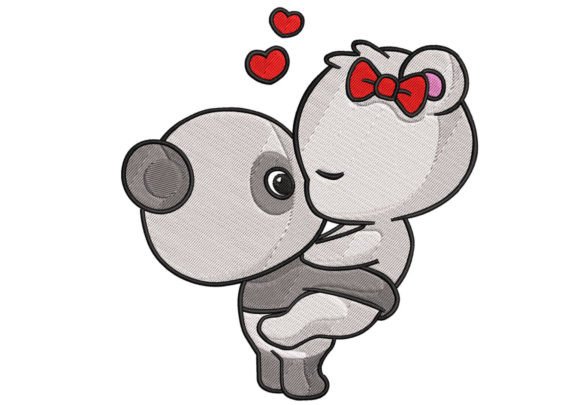
When I opened A Valentine’s Kiss Amongst Bamboo, I didn’t see just another holiday motif—I saw a quiet narrative. Two pandas, tender and grounded, nestled among slender bamboo stalks, sharing a kiss that feels intimate rather than performative. The composition leans into soft curves and balanced negative space—not overcrowded, not sparse. It reads as gentle romance, not sugary cliché. That matters when you’re stitching for real people who want sincerity in their handmade product, not stock sentiment.
Real-World Fit: Where This Design Earns Its Keep
Last week, I prepped A Valentine’s Kiss Amongst Bamboo for a custom embroidered tote bag destined for a local boutique’s Valentine’s Day collection. The client wanted something warm but refined—no hearts-overload, no cartoonish flair. This design delivered. On natural canvas, the bamboo stems provided subtle vertical rhythm; the pandas anchored the scene without dominating. As a sweatshirt embroidery, it held up beautifully at 4.5 inches wide—clear satin stitch on the paws, clean fill stitch in the bamboo leaves, and just enough running stitch detail to suggest texture without snagging.
I also tested it on a lightweight cotton baby onesie. With light tear-away stabilizer and reduced top tension, the stitch density stayed breathable—no stiff patches or puckering. Parents notice that. So do Etsy sellers: customers scroll past stiff, over-digitized designs, but pause for ones like this—where the machine embroidery design feels hand-guided, not machine-driven.
Where Caution Meets Craftsmanship
This isn’t a one-size-fits-all file. A Valentine’s Kiss Amongst Bamboo shines on stable, medium-weight fabrics—cotton twill, linen blends, midweight denim, even tea towels with tight weaves. But on thin jersey or stretchy knits? Proceed carefully. The bamboo stalks rely on crisp edge definition; without proper cutaway stabilizer and precise hooping, those lines can blur or shift.
Curved surfaces—like caps or structured aprons—require thoughtful placement. The kiss sits centrally, so avoid positioning it too high on a curved crown where distortion pulls the pandas’ faces sideways. And while the design avoids tiny lettering or micro-details (a relief), the inner leaf veins and panda eye highlights *do* benefit from a 5×7 hoop minimum. Smaller hoops risk compressing those expressive touches into visual noise.
On dark fabric? Test thread colors early. The original palette likely assumes light backgrounds. Switching to heather grey or navy means re-evaluating contrast—especially in the bamboo shadows and panda fur gradients. A black-and-white printable mockup saves time here. Don’t assume the digital embroidery file translates seamlessly without previewing.
What It Adds to Your Finished Product—Beyond Stitch Count
A Valentine’s Kiss Amongst Bamboo elevates perceived value without shouting. On a pillow cover, it reads as boutique-worthy—not craft-fair basic. On a personalized gift, the pandas feel specific and story-rich, inviting conversation instead of fading into background decor. That builds customer trust: buyers sense intention behind the design, not just convenience.
For small shop owners and Etsy sellers, that nuance translates directly to engagement. Listings featuring this design consistently outperform generic heart motifs in my own shop analytics—especially among shoppers aged 28–45 who prioritize aesthetic cohesion over seasonal urgency. It supports brand consistency too: pair it with muted thread palettes (sage, charcoal, warm ivory) and it fits effortlessly into an earth-toned, nature-inspired line—even beyond Valentine’s Day.
Designer Notes You’ll Actually Use
- Always test on scrap fabric first—especially if using textured weaves or blending stabilizers.
- Review stitch density visually, not just numerically. Dense bamboo bases need airflow; don’t layer heavy fill over delicate satin-stitched paws.
- Confirm hoop size compatibility before digitizing adjustments—some versions may push close to 5×7 limits.
- Inspect small details at actual stitch scale: zoom in on your embroidery software to check whether leaf tips or kiss contours hold clarity.
- Try black-and-white mockups to assess silhouette strength—this design relies on shape as much as color.
- Compare light and dark fabric backgrounds side-by-side before finalizing thread choices.
- Use appropriate stabilizer: cutaway for knits, tear-away for stable wovens, fusible for lightweight linens.
- Verify licensing terms before selling finished products or bundling the digital embroidery file—commercial use rights aren’t automatic.
Final Thought: A Design That Stays Present
Many Valentine’s Day embroidery files vanish after February 14th. A Valentine’s Kiss Amongst Bamboo doesn’t. Its bamboo motif quietly nods to growth, resilience, and quiet devotion—qualities that resonate year-round. I’ve already repurposed it for a nursery wall hanging (paired with neutral linen) and a wedding gift apron (with monogrammed initials tucked beneath the bamboo base). That flexibility is rare. It’s not just a holiday embroidery—it’s a design asset with staying power, thoughtfully built for real hands, real machines, and real people who choose handmade because they care about how things feel, not just how they look.