Beautiful Couple: A Designer’s Real-World Embroidery Review
First Impressions: Whimsy with Warmth, Not Just Cliché
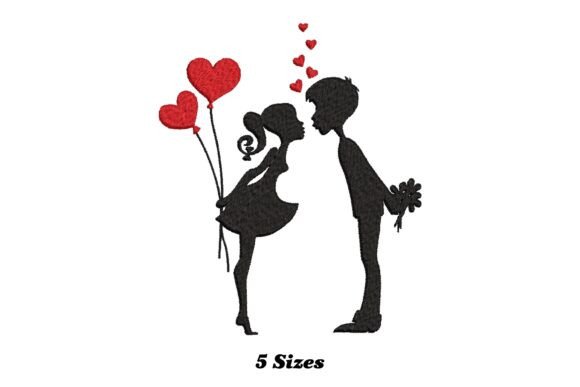
When I opened Beautiful Couple for the first time, I wasn’t looking for hearts and cupids—I was checking whether it could hold its own on a handmade tote bag I’m prepping for a local boutique launch. And it did. Instantly. The design leans into soft curves, gentle spacing, and a subtle asymmetry that feels human—not stiff or overly symmetrical like some Valentine S Day embroidery files. It’s not cartoonish, but it’s not minimalist either. There’s warmth in the line weight, a quiet confidence in how the two figures lean toward each other, hands lightly joined. That balance makes Beautiful Couple feel like a machine embroidery design you’d choose for a gift you’d proudly give—not one you’d hide behind a tag.
Where It Shines: Real Projects, Real Customers
I stitched Beautiful Couple onto three very different things last week: a medium-weight cotton twill tote, a brushed-cotton baby onesie, and a linen-blend tea towel. Each result reinforced where this design belongs—and where it doesn’t.
- Tote bags & aprons: Perfect. The scale reads clearly at 4–5 inches wide, and the stitch density stays breathable—no puckering, even without heavy stabilizer. The satin stitch outlines hold crisp edges, and the fill stitch areas (like the shared scarf or overlapping sleeves) have just enough texture to catch light without looking muddy.
- Baby embroidery & nursery decor: Thoughtful, not saccharine. On the onesie, it read as tender—not cutesy—especially in muted thread colors (I used heather grey and oatmeal). Parents notice that difference. It elevates the handmade product without shouting “Valentine S Day.”
- Tea towels & pillow covers: Works beautifully when centered or subtly off-axis. Because the composition isn’t top-heavy or overly vertical, it anchors fabric without overwhelming it. That’s rare in holiday embroidery—most lean too literal or too busy.
Where to Pause—and Why
Beautiful Couple isn’t a one-size-fits-all embroidery file. It asks for intentionality—not because it’s flawed, but because its charm lives in its subtlety.
- Small hoop sizes (under 4”): Avoid compressing it. The hand-hold detail and facial suggestion rely on clean negative space. Shrinking risks blurring those quiet moments that make it feel personal.
- Stretchy or thin fabrics (like jersey or lightweight rayon): Use cutaway + tear-away combo stabilizer. The running stitch accents (like hair strands or scarf fringe) can waver without firm backing—especially on custom apparel meant for daily wear.
- Dark or textured backgrounds (e.g., corduroy, fleece, black terry): Test thread contrast first. Lighter threads (ivory, pale rose, soft sage) read well—but avoid white-on-charcoal unless you’re adding underlay. Some fill stitch zones get dense; on dark fabric, that can mute dimension.
- Caps & curved surfaces: Not ideal out of the gate. The shape assumes flat real estate. You’d need digitizing tweaks—or better yet, use it as an embroidered patch instead, then appliqué it cleanly.
What It Does for Your Craft Business—Beyond the Stitch
As an Etsy seller and small shop product developer, I judge designs by what they do for *customer trust*, not just visual appeal. Beautiful Couple builds credibility. It looks intentional—not templated. When customers see it on a sweatshirt or pillow cover, they don’t think “generic holiday embroidery.” They think, “This person chose something with care.” That perception directly affects perceived value, repeat orders, and word-of-mouth referrals.
It also plays well across branding. I’ve used it in printable mockups for two different boutique clients—one earth-toned, one pastel-focused—and it adapted without feeling forced. That flexibility matters if you sell digital embroidery files or offer embroidery services. It’s versatile enough for commercial embroidery jobs, but distinctive enough to stand out in a sea of clip-art hearts.
Practical Designer Notes—No Fluff, Just What You’ll Need
Before stitching Beautiful Couple into your next finished product, here’s what I always do—and recommend you do too:
- Run a test on scrap fabric matching your final substrate—even if it’s “just cotton.” Thread tension shifts with weave, weight, and finish.
- Check stitch density visually: zoom in on the embroidery file preview. Are the fill stitch areas tight enough to hold shape, but open enough to drape? With Beautiful Couple, they are—unless you’re using ultra-thick thread or low-quality bobbin thread.
- Confirm hoop size compatibility *before* hooping. Don’t assume it fits your standard 5x7—it may push the edge, especially with optional border elements.
- Inspect small details: the curve of the joined hands, the separation between hair and collar. These are where digitizing quality shows—or falters.
- Mock it up in black and white first. If it reads clearly without color, you’ve got a strong design. Beautiful Couple does.
- Compare light vs. dark fabric backgrounds side-by-side. Adjust thread colors accordingly—not just for contrast, but for mood. Soft peach reads romantic on ivory; charcoal grey reads grounded on navy.
- Use proper stabilizer for your fabric type—not just “what’s on hand.” This design rewards attention to backing.
- Verify licensing terms before selling finished items or reselling the digital embroidery file. The description says it’s a machine embroidery design—but check whether personal, small business, or commercial use is permitted.
Final Thought: It’s Not Just for February
I’ll be honest: I almost passed on Beautiful Couple because of the “Valentine S Day” category tag. But once stitched, it revealed itself as something quieter and more lasting—a celebration of connection, not a seasonal obligation. I’ve already reimagined it as a wedding gift (stitched on linen napkins), a new-parent keepsake (on a quilt square), and even a small-batch boutique logo accent (scaled down, monochrome, on garment tags). That longevity—across projects, seasons, and customer types—is what separates a good embroidery design from a great one. Beautiful Couple earns its place in your design assets. Just stitch it with intention—and let the warmth speak for itself.