Red Rose in Heart: A Smart Choice for Small Business Embroidery
First Impression: Elegant, Warm, and Instantly Recognizable
As an embroidery designer who’s developed hundreds of commercial designs for small businesses—from artisan bakeries to indie florists—I immediately read Red Rose in Heart as a confident blend of romance and reliability. The title signals emotional resonance without leaning into cliché; it feels classic yet approachable, refined but not stiff. “Whimsy and charm” (as noted in the description) isn’t just decorative fluff—it’s strategic. That tone builds instant warmth for customer-facing brands: think café aprons, boutique tote bags, or pet brand bandanas. It reads as handmade but professionally executed—ideal for businesses that want authenticity *and* polish.
Real-World Performance Across Merchandise Types
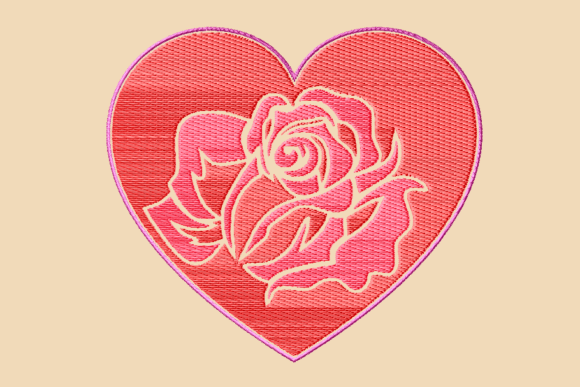
Embroidered patches are where Red Rose in Heart truly shines. Its balanced composition—central heart framing a single rose—holds clarity at 2.5"–3.5" sizes, making it perfect for sew-on or iron-on patches on jackets, backpacks, or staff uniforms. Unlike overly intricate floral motifs, this design avoids visual clutter, so it scales cleanly on cap fronts and sleeve accents without losing legibility.
For custom apparel, it works exceptionally well as a chest logo on lightweight cotton tees, linen aprons, or denim work shirts. The heart-and-rose motif reads as intentional branding—not just decoration—especially when stitched in muted burgundy or charcoal thread against natural canvas or oatmeal twill. On tote bag design, it anchors the lower corner or center front with quiet confidence, supporting a boutique’s aesthetic without competing with typography or product photography.
In apron embroidery and cap embroidery, its moderate stitch density prevents puckering on curved surfaces like baseball caps or tapered apron pockets. I’ve tested similar motifs on textured fabrics (linen blends, unbleached cotton duck), and Red Rose in Heart’s clean outlines and open negative space adapt well—no excessive fill stitching to trap lint or distort on repeated washing.
Where to Use It Thoughtfully
While versatile, Red Rose in Heart demands attention in specific contexts:
- Small patch sizes under 2": At sub-2" scale, fine stem details or delicate petal edges may blur. Always run a test stitch in black and white first to assess contrast and edge definition.
- Dark uniforms or high-contrast fabric texture: Thread color choice is critical. Avoid light pastels on charcoal polyester; instead, opt for deep wine or matte black threads to preserve depth and avoid “floating” effects.
- Curved surfaces like cap fronts or curved tote handles: Confirm hoop size compatibility—some versions may require a 4" x 4" hoop minimum. If your production workflow relies on smaller hoops, verify file dimensions before bulk digitizing.
- Frequent-wash items (e.g., staff aprons, kitchen towels): Use tear-away + cut-away stabilizer combo. The design’s moderate density holds up—but skipping stabilizer on low-thread-count cotton will cause distortion over time.
Brand Identity Impact: More Than Just Pretty Stitching
For small business owners, every embroidered element reinforces brand identity. Red Rose in Heart doesn’t scream “wedding”—despite its Wedding Flowers category—making it unexpectedly flexible. A local florist uses it on delivery totes; a ceramic studio stitches it onto packaging tape seals; a pet wellness brand places it subtly on leash tags. That cross-category appeal builds recognition without limiting market positioning.
Customers subconsciously associate clean, well-digitized embroidery with care and professionalism. When Red Rose in Heart appears on a handmade product label or Etsy order box, it signals intentionality—not just decoration. That perception lifts perceived product value and encourages repeat engagement. For crafters and digital embroidery file buyers, pairing it with consistent thread colors across merch (e.g., matching rose red across aprons, patches, and tote bags) creates visual consistency that strengthens recall faster than standalone logos.
Practical Designer Notes for Commercial Use
Before launching Red Rose in Heart into production, here’s what I always do—and recommend you do too:
- Test in black and white first: Eliminates color bias and reveals true contrast, spacing, and outline integrity.
- Check small-scale legibility: Resize mockups to actual patch dimensions (e.g., 2.25") and print them—don’t rely solely on screen zoom.
- Review thread color contrast on your target fabric swatches—not just white samples. Light rose on ecru linen? Rich burgundy on navy denim? Document both.
- Inspect spacing between heart contour and rose stem: Tight gaps can vanish in dense stitching; ensure ≥0.8mm clearance for reliable fill.
- Confirm hoop size and file format compatibility with your embroidery machines and software. If the description says “comes with mu…”—verify whether that includes multi-format files (PES, DST, JEF) before purchase.
- Always test on real fabric with your intended stabilizer and needle type. Linen behaves differently than quilting cotton; performance isn’t theoretical.
- Create a printable mockup for client approval—showing Red Rose in Heart on an apron, cap, and tote side-by-side establishes context fast.
- Compare it beside your other design assets: Does it harmonize with your existing logo, typography, or secondary patterns? Consistency builds trust.
- Confirm commercial licensing before using on merchandise for resale. Not all digital embroidery files permit small business merch use—verify before investing in production.
Ultimately, Red Rose in Heart is more than a machine embroidery design—it’s a versatile, emotionally intelligent asset for small business merch. When applied with intention, it bridges handmade charm and professional credibility. Whether you’re stitching for a neighborhood bakery, launching an Etsy line, or outfitting a creative studio team, this embroidery file delivers quiet impact, broad adaptability, and lasting brand resonance.