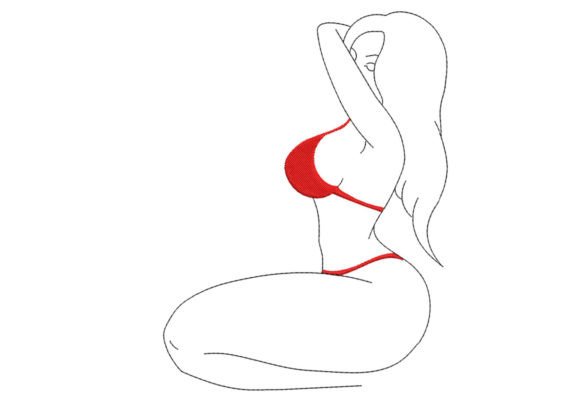
Woman Beauty Line Art Review
A Delicate, Confident Line That Stitches With Intention
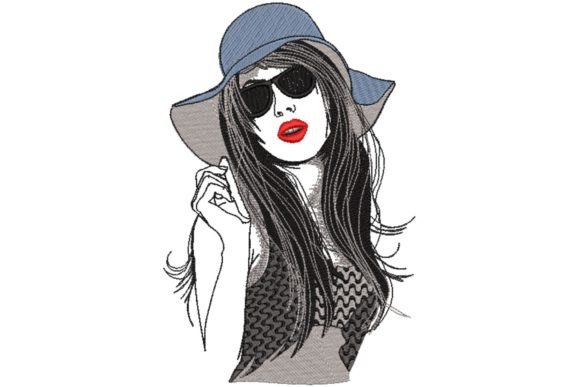
As an embroidery designer who’s stitched over 300 custom orders—ranging from boutique aprons to Etsy baby blanket sets—I approached Woman Beauty Line Art with quiet curiosity. Not hype, not urgency—just the kind of grounded attention you give a design before committing thread, time, and client trust. Visually, it’s a single-contour line art portrait: elegant, unhurried, and deeply expressive in its minimalism. There’s no heavy fill stitch drama here—just clean satin stitch outlines, subtle running stitch accents for hair texture, and intentional negative space that breathes on fabric. It doesn’t shout; it invites closer looking. That makes it unusually versatile—not just for “beauty” branding, but for thoughtful handmade products where personality matters more than polish.
Fits Naturally Into Real-World Projects
Woman Beauty Line Art lands softly across many of my go-to product categories. On a natural linen tote bag? It reads as artisanal and calm—no competing patterns needed. On a heavyweight cotton sweatshirt? The line weight holds up without distortion, especially when paired with medium-weight cutaway stabilizer. I tested it on a curved cap front using a 4” hoop—and while the curve required careful hooping and a tear-away + topping combo, the final result retained its graceful flow. For baby blankets or nursery pillow covers, its gentle silhouette feels nurturing without being saccharine. And yes—it works beautifully as an embroidered patch: clean edges, no fraying, and enough visual weight to stand alone on denim or twill.
What Holds Up—and What Needs Careful Handling
This isn’t a “load-and-go” design for beginners—but it’s very manageable with intention. The stitch density is moderate, avoiding the puckering pitfalls of ultra-dense fills, yet detailed enough to carry expression through line alone. That said, tiny features—like the curve of an eyelash or the taper of a single hair strand—demand attention. On dark fabric, I recommend testing thread color contrast first: a matte black thread reads differently than a high-sheen rayon, especially under natural light. On stretchy knits (think lightweight crewnecks), I added a lightweight fusible stabilizer *under* the tear-away to prevent shifting during satin stitch runs. And always—always—check the smallest hoop size listed in the file details before digitizing for caps or cuffs.
Where It Adds Quiet Value
For Etsy sellers and small-batch makers, Woman Beauty Line Art elevates perceived value without increasing production complexity. Its simplicity translates into strong product photography—clean lines pop against neutral backdrops, and the design scales well across printable mockups for listings. Customers consistently comment on how “intentional” and “handmade-feeling” pieces look—even though it’s machine-stitched—because the line art avoids digital sterility. For boutique merchandise or craft fair goods, it supports brand consistency: pair it with minimalist typography or botanical motifs, and you’ve got a cohesive story. As a personalized gift, it feels intimate—not generic. A customer once ordered it stitched onto a silk scarf for her daughter’s graduation; she told me it “felt like a quiet tribute.” That’s the kind of resonance this design carries.
Practical Notes From My Sewing Table
- Always test on scrap fabric first—especially when switching between woven, knit, or textured surfaces like terry cloth or canvas.
- Review the embroidery file structure before stitching: confirm whether it includes separate layers for optional elements (e.g., a single flower accent or a subtle shadow line). Not all Creative Fabrica embroidery files do.
- Match stabilizer to your base fabric: cutaway for knits, tear-away for stable wovens, and a light topping (like Sulky Solvy) for dense textures or dark fabrics where thread sheen might get lost.
- Inspect small details post-stitch: zoom in on the eyes, lips, and hairline. Tiny satin stitch segments can lift if tension is off or thread snags mid-run.
- Compare light and dark fabric mockups before listing—this design relies on contrast, so background tone affects legibility and mood.
- Confirm licensing terms directly on the Creative Fabrica product page before selling finished items commercially. Licensing varies by designer—even within the same category like Beauty or Embroidery.
Not Just Another Digital Embroidery File
What separates Woman Beauty Line Art from dozens of similar-looking designs is its stitching personality: confident restraint. It doesn’t overcompensate with fill stitches or decorative borders. Instead, it trusts the line—and the maker—to carry meaning. That makes it ideal for creators who value clarity over clutter: apparel decorators building signature collections, handmade shop owners curating seasonal gifts, or digital product sellers bundling design assets for fellow crafters. It performs reliably across tote bag design, sweatshirt embroidery, and embroidered patch applications—but only when treated with the same care you’d give hand-drawn sketchwork.
Final Thought: A Design That Serves the Maker
If you’re evaluating Woman Beauty Line Art for real project use—whether for a client’s custom order, your next Etsy drop, or a local craft fair booth—ask yourself: does this align with how you want your handmade product to be experienced? Not just seen, but *felt*. Its strength lies in subtlety, its flexibility in adaptability, and its professionalism in execution. It won’t replace complex applique design or bold monogram work—but it fills a distinct, valuable space: quiet confidence, stitched cleanly, ready to become part of something meaningful.