Mallard Duck Head: A Quirky, Craft-Ready Embroidery Design
First Impressions: Charm With Clear Intent
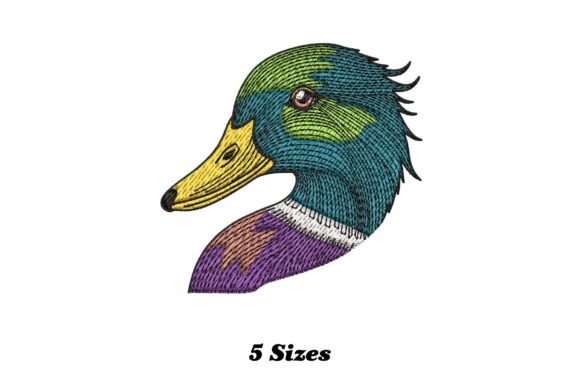
When I opened the Mallard Duck Head embroidery file, I didn’t see just another bird motif—I saw a confident, slightly mischievous personality stitched into clean lines and balanced proportions. It’s not overly detailed or fussy, but it’s not cartoonish either. There’s a subtle nod to realism in the curve of the beak and the soft suggestion of feather texture near the crown—enough to feel intentional, not overwhelming. This isn’t a design that shouts; it smiles. That makes it ideal for handmade products where warmth and character matter more than flash.
A Real Project Test: The Embroidered Kitchen Towel
Last week, I used Mallard Duck Head on a set of linen-cotton blend tea towels for a local boutique launch. We stitched it centered just below the towel’s hem—small enough to avoid bulk, large enough to read clearly at arm’s length. The result? Customers paused. They smiled. One even asked, “Is that a real mallard? My dad used to point them out on the pond.” That kind of quiet resonance is gold for craft businesses—and it’s why this design works beyond decoration. It invites connection.
Where It Shines (and Where It Needs Thought)
Mallard Duck Head lands beautifully on medium-weight woven fabrics: cotton twill aprons, canvas tote bags, structured pillow covers, and midweight sweatshirts. Its shape holds up well on curved surfaces like baseball caps—but only if you use light cutaway stabilizer and reduce tension slightly. On baby onesies? Yes—but stick to the smallest available size and avoid satin-stitched eyes if the fabric is ultra-thin. For holiday embroidery or nursery decor, it adds gentle whimsy without leaning into cliché.
It’s less ideal for dense, highly textured fabrics like terry cloth towels unless you’re willing to add extra topping stabilizer—and even then, fine details like the eye highlight may soften. Likewise, on dark fabric, make sure your thread colors have enough contrast. I tested it in navy with ecru thread: legible, but lost some definition in the beak shadow. Switching to pale yellow brought back clarity without sacrificing charm.
Stitch Behavior & Practical Performance
This is a straightforward machine embroidery design—no complex applique layers or nested satin stitches. You’ll find clean fill stitch for the head mass, smooth satin stitch for the beak, and subtle running stitch accents for dimension. Stitch density feels moderate—not so heavy it’ll pucker lightweight knits, not so sparse it looks unfinished on home decor. That balance means fewer re-hooping moments and smoother transitions across multiple items in a batch.
That said, always test on scrap fabric first—especially if you’re stitching on stretchy apparel or layered garments like reversible zip-up hoodies. I once ran Mallard Duck Head on a ribbed cotton blend sweatshirt without testing: minor puckering around the jawline. A quick stabilizer swap (to tear-away + light iron-on) solved it. Small fixes, big impact.
Commercial Use & Customer Perception
As an Etsy seller and small shop product developer, I pay close attention to how a design reads *after* it’s stitched—not just in the digital preview. Mallard Duck Head delivers strong handmade presentation: clean edges, consistent line weight, no jagged vector artifacts. That translates directly to customer trust. When buyers see a crisp, confident duck head on a custom embroidered patch or personalized gift, they assume care was taken—not just in stitching, but in curation.
For branding, it’s versatile but not generic. It fits cottagecore, outdoor-themed shops, or even minimalist lifestyle brands—if paired thoughtfully. I’ve seen it work as a subtle logo alternative on apron pockets, as a playful accent on baby blanket corners, and even as part of a seasonal collection (think “Autumn Ducks” alongside acorns and maple leaves). Just avoid pairing it with overly busy patterns—it needs breathing room to land.
Design Assets That Earn Their Place
This isn’t filler. Mallard Duck Head belongs in your core embroidery project toolkit—not as a one-off novelty, but as a reliable, mood-lifting asset. It scales well for printable mockups (I use it regularly in neutral-toned flat lays), holds up in black-and-white product photography, and reads clearly even in thumbnail size on Etsy listings. That visibility matters when shoppers scroll fast.
Designer Notes You Can’t Skip
- Test before committing: Run it on scrap fabric matching your final product’s weight, stretch, and finish.
- Check thread color contrast: Especially on dark or heathered backgrounds—what looks rich on screen may mute in stitch.
- Review stitch density: If layering over seams or curves, consider reducing density by 5–10% to prevent stiffness.
- Confirm hoop size: Know your minimum requirement—some versions may need a 4x4 hoop minimum; others fit comfortably in 3x3.
- Inspect small details: Zoom in on the eye area and beak tip—these are common spots for digitizing inconsistencies.
- Use proper stabilizer: Light cutaway for knits, tear-away for stable wovens, topping for napped fabrics.
- Licensing check: Verify whether the embroidery file permits commercial use of finished products—or resale of the digital embroidery file itself—before listing on Etsy or at craft fairs.
Final Thought: Personality, Not Just Pixels
What makes Mallard Duck Head stand out isn’t technical perfection—it’s personality with purpose. It doesn’t try to be everything. It’s a focused, joyful moment in thread: expressive enough to delight, restrained enough to respect the fabric it lives on. Whether you’re embroidering a one-of-a-kind personalized gift or building a cohesive line of small shop products, this design earns its place—not because it’s trendy, but because it’s quietly, confidently right.