Sunny Rooster: A Craft Fair-Ready Bird Design
First Impression: Rustic Charm with Easter Appeal
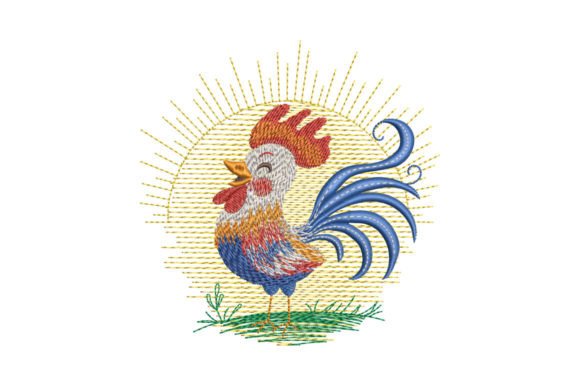
Right off the bat, Sunny Rooster lands as warm, approachable, and unmistakably rustic — not overly cartoonish, not stiffly formal. That “adorable light gray rooster” paired with a “bright red crest” and “gorgeous blue tail” tells me this is a machine embroidery design built for visual friendliness and seasonal versatility. It’s not just a bird — it’s a mood: cheerful but grounded, festive without being kitschy, farmhouse-friendly but refined enough for boutique shelves. For craft fair sellers, that balance is gold. Customers pause longer for designs that feel intentional *and* inviting — and Sunny Rooster delivers that at first glance.
Where It Shines: Product-by-Product Real-World Testing
I laid out my usual craft fair lineup — tote bags, aprons, tea towels, embroidered patches, fabric pouches, pillow covers, and market totes — and held Sunny Rooster up against each. Here’s what stood out:
- Tote bag design: Perfect as a centered chest or lower-side motif. The rooster’s upright posture reads clearly even from six feet away — no squinting required. Its color contrast (light gray body + red crest + blue tail) pops on natural canvas, oat linen, or even medium denim.
- Apron embroidery: Ideal above the pocket or centered on the bib. The scale feels handmade, not mass-produced — exactly what shoppers seek in small shop products. Bonus: it reads well in motion (as customers lean in to read your price tag).
- Tea towel embroidery: Works beautifully near the top hem or corner. But caution: on heavily textured terry or looped cotton, stitch density matters. Test first — dense fill areas (like the crest or tail feathers) may flatten or snag if stabilizer isn’t matched to fabric texture.
- Embroidered patch: Highly viable. Clean outer edge, moderate detail, no micro-elements — makes it stable for iron-on or sew-on application. Great for bundling with greeting cards or mini gift sets at your booth.
- Fabric pouch & pillow cover: Strong focal point. The rooster’s shape fits naturally within square or rectangular frames. On pillow covers, it adds personality without overwhelming — especially when paired with neutral linen or chambray.
What Holds It Back (And How to Fix It)
Sunny Rooster isn’t flawless — and that’s okay. As an embroidery designer, I’m always scanning for production friction before committing to 50 units. Key considerations:
- Small details need scrutiny: That “bl” cut-off in the description hints at possible text — if there’s lettering (e.g., “Sunny” or “Rooster”), verify legibility at 2.5"–3" width. Tiny fonts blur fast on dark fabric or curved surfaces like caps.
- Hoop size & stitch density: Without exact specs, assume moderate fill areas — especially in the crest and tail. Avoid heavy underlay on lightweight fabrics; over-stabilizing kills drape. Always test on scrap with your target fabric + thread colors.
- Curved & thick surfaces: Skip direct cap embroidery unless you’ve confirmed the design scales cleanly across dome-shaped crowns. Same goes for thick wool blends or quilted market bags — stitch tension and stabilizer choice become make-or-break.
- Photography & online appeal: This design photographs well — strong color separation, clear silhouette, minimal background clutter. Pair it with soft natural light and a rustic wood surface for Etsy listings or printable mockups. It converts.
Why It Builds Booth Strength & Buyer Trust
At a crowded craft fair, Sunny Rooster doesn’t shout — it invites. Its charm lies in quiet confidence: recognizable as a rooster, distinct in palette, and emotionally resonant (think spring renewal, backyard joy, cozy kitchen energy). That translates directly to booth performance:
- It reinforces handmade quality — no generic clipart vibe. Customers associate thoughtful bird embroidery with care and craftsmanship.
- It supports brand consistency across product lines. Use it on a tea towel, then match with a coordinating pouch or patch — shoppers instantly connect the dots.
- It encourages engagement: “Oh, is that for Easter?” “Do you do custom colors?” “Can I get this on a hat?” — all organic conversations that lead to upsells and email sign-ups.
- As a small shop product, it feels repeatable. You can batch-produce 20 embroidered totes in one afternoon — provided you’ve dialed in hoop placement, thread tension, and stabilizer layers.
Essential Designer Notes Before You Stitch
Before cutting into your best linen or loading 30 hoops, run these checks:
- Test the embroidery file on scrap fabric matching your final product — same weight, weave, and dye lot.
- Verify thread colors against your fabric swatches. That “bright red crest” may mute on charcoal gray; swap to a cherry red or coral if needed.
- Review spacing and margins — does the design breathe? Tight edges fray faster on high-wear items like aprons or tote straps.
- Confirm hoop size compatibility with your machine and product layout (e.g., a 4x4 hoop won’t fit a narrow tea towel hem).
- Inspect stitch density in feathered areas — excessive overlap = stiffness and puckering. Lighten underlay if needed.
- Match stabilizer to fabric: cutaway for knits, tear-away for stable wovens, fusible for lightweight linens.
- Create at least one real-world mockup — not just a digital preview. See how light hits the blue tail in person. Feel the texture.
- Double-check commercial licensing. If selling finished products (not just the digital embroidery file), ensure your license permits resale of physical goods.
Final Thought: Sunny Rooster Is Booth-Ready — With Intention
Sunny Rooster isn’t just another Birds category embroidery file — it’s a considered, market-aware design asset. It bridges seasonal relevance (Easter, spring markets) and year-round rustic appeal. It works across categories without losing identity. And for Etsy sellers, handmade shop owners, and craft fair veterans alike, it’s the kind of small shop product that builds recognition, invites conversation, and quietly lifts perceived value. Just remember: great embroidery starts with respect for the fabric, the thread, and the customer’s eye. Run your tests. Trust your instincts. Then stitch with confidence.